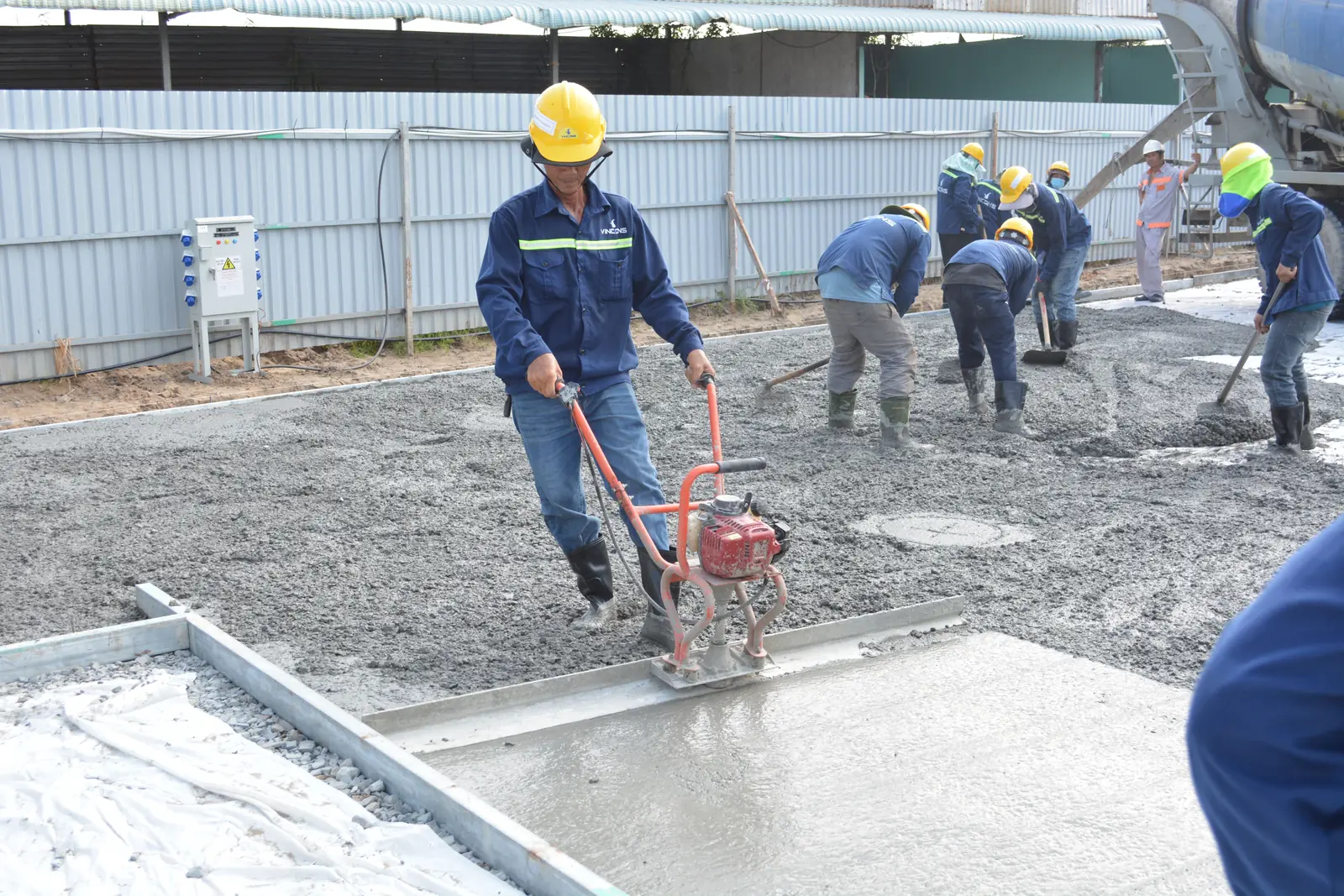
Specification, phasing and access dates — all three on the quote
Commercial Concrete in Frisco, TX
Light commercial concrete for retail, office and small industrial sites: service aprons, bin pads, walkways, equipment pads and panel replacement. The concrete is the easy part — keeping the site open while a section is out is what the plan is for.
- Phasing plan written down, so an entrance stays open throughout
- 6-inch bin pads with #4 rebar, and the truck approach quoted with them
- Flatwork only — no structural frames, tilt-wall, industrial floors or asphalt
Tell us the site, the area and your access constraints. Someone attends, measures, and you get the number in writing.
Commercial concrete on a working site: the sequence is the job
A service apron is a couple of days of concrete work and four weeks before a loaded delivery truck should be on it. Those are different numbers, and only one of them appears on most quotes.
Concrete takes foot traffic at 24 to 48 hours, passenger vehicles at 7 days, and heavy loads at 28. Nothing about pouring at night changes that. What phasing buys you is a route in and out while the clock runs.
So the plan comes before the price: which section goes first, where the barriers stand, which door stays open, when the bins can be lifted again. It is written on the quote, and it is the part a per-foot number tells you nothing about.
No fee, no obligation.
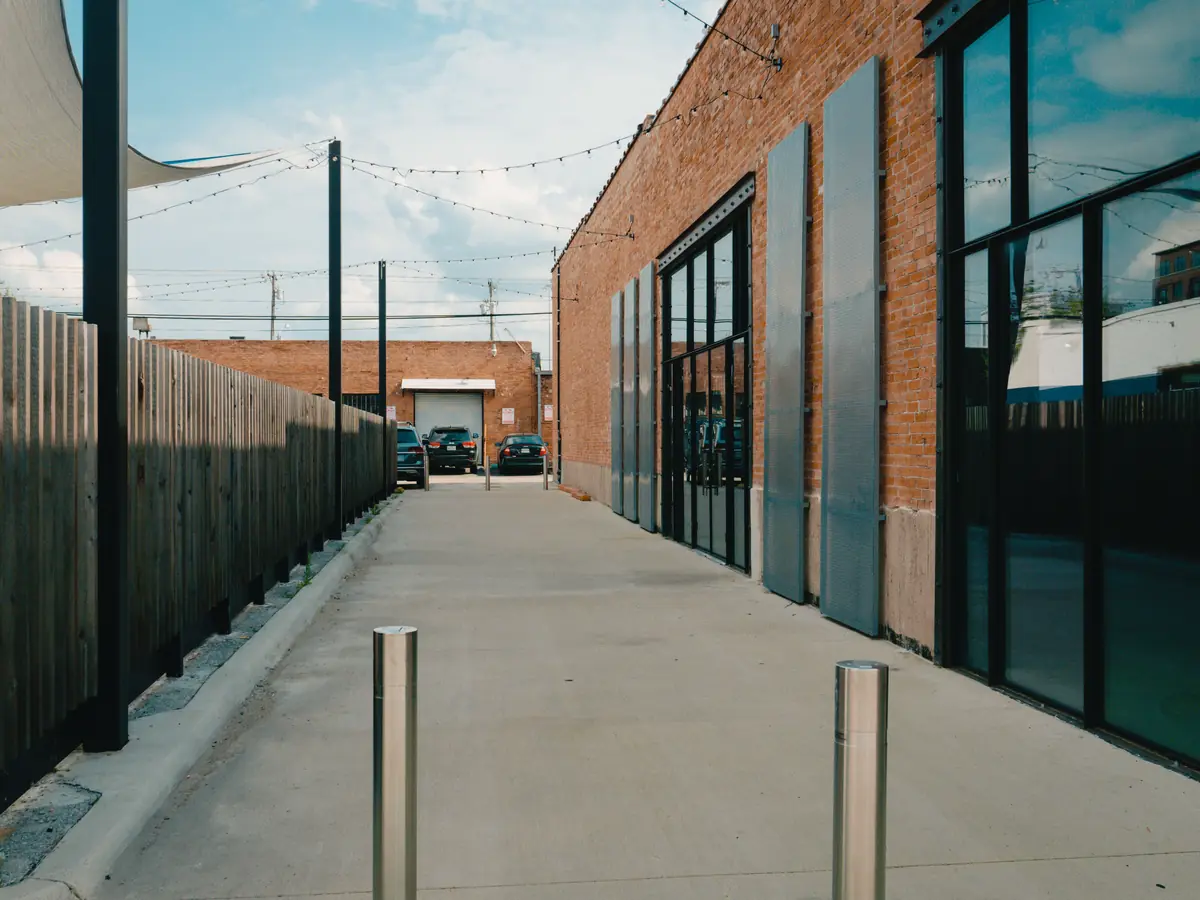
The commercial concrete we take in Frisco
Four categories, all of them flatwork. Each is quoted with the thickness, the steel and the phasing stated.
Service aprons and delivery areas
An apron takes the heaviest wheel loads on a small commercial site, usually from vehicles turning under load rather than driving straight. We build them at 6 inches with #4 rebar at 18-inch centres over 4 to 6 inches of compacted base, thicken the edge where the wheels track, and dowel new work into the panels that stay. Every apron quote states the thickness, the steel and which day the area is out of use.
Bin and dumpster pads
A bin pad carries a loaded container and the truck that lifts it, and the approach the truck reverses over is part of the same problem. We pour the pad at 6 inches with #4 rebar and give the approach the same specification rather than leaving it as whatever is there. Every bin pad quote prices the pad and the approach as separate lines, because the approach is the part most often left out and the part that fails first.
Walkways, entrances and ramps
Pedestrian concrete on a commercial site is thin, heavily used and directly in front of your customers, so it is where a repair shows most. We pour walks at 4 inches over compacted base with mesh or #3 rebar, keep panels square with joints cut to a quarter of the slab depth, and set fall away from doorways. Every entrance quote states which door is affected and for how long, agreed before the work is booked.
Panel replacement on parking areas
Panel replacement is the repair for a concrete parking area where individual bays or drive lanes have failed while the rest is sound. We saw-cut the failed panels out to the nearest existing joints, break them out and haul them away, rebuild the base, and repour at full thickness dowelled into what stays. Every panel replacement quote states that new concrete will not colour-match the surrounding panels — on a customer-facing lot that matters, and it is better known in advance.
Equipment, generator and plant bases are on the concrete slabs page, and a slab carrying a structure is a concrete foundation. Cracks and spalling are concrete repair, a worn but sound surface is concrete resurfacing, and clearing an old slab is concrete removal. The rest of the trade is on the concrete services hub.
The spec goes on the quote before you decide anything.
What breaks commercial flatwork in Frisco
A commercial slab gets the same soil as a residential one and several times the load, concentrated in the same few places every day.
The same clay, under more weight
Frisco sits on Blackland Prairie clay, and the dominant Houston Black soil routinely tests at a plasticity index of 40 to 60, where the building code calls a soil expansive at 15.
A commercial slab spans that movement while carrying delivery vehicles rather than cars. Thickness and steel sized for the vehicle rather than for the square footage is the whole difference.
Vehicles turning in the same spot every day
A delivery truck reversing to the same door puts repeated turning load through a few square feet of slab.
That is a fatigue problem rather than a one-off overload, and it is why the approach gets the same specification as the pad it serves rather than being treated as ordinary paving.
Trenches through the lot
Utility and drainage runs are trenched across commercial slabs regularly, and backfill dropped in one lift keeps consolidating for years afterwards.
The panel above it drops and cracks parallel to the trench. Repouring without rebuilding the base under it repeats the failure on the same line.
Large pours in a North Texas summer
A commercial placement is a large exposed area finished in one operation, and in July and August water leaves the surface faster than it rises through the slab.
Adding water on site to keep a big pour workable weakens the placement rather than just the skin. Early starts, an evaporation retarder and a proper cure are quoted as part of the work.
The site visit tells you which of these you actually have.
You will know when the site can be used again before you book
All three dates go on your quote in writing, alongside the phasing. Foot traffic at 24 to 48 hours, passenger vehicles at 7 days, and delivery vehicles or bin lifts at 28 — pouring out of hours moves the start, never the clock.
Cold weather extends every one of them. If that applies to your pour, you hear it before the truck is ordered rather than afterwards.
Curing guidance: NRMCA CIP 11, Curing In-Place Concrete.
Our commercial quote against the typical commercial quote
Same area, same site. The difference is whether the phasing and the access dates appear anywhere on the page.
| On the page | DFW Concrete Co. | The typical quote |
|---|---|---|
| Price | One number for the job as scoped | A per-foot range that moves on the day |
| Slab thickness | Stated in inches | Not mentioned |
| Reinforcement | Rebar or mesh, size and spacing | "Reinforced" — the entire line |
| Joint spacing | Planned and written | Cut wherever, if at all |
| Haul-off and clean-up | In the price | Added at the end |
Take our quote to any other contractor and compare it line by line. That is what it is for.
Free. No obligation. Most quotes back the same day.
How much does commercial concrete cost in Frisco, TX?
Light commercial flatwork runs the same 2026 market ranges as heavy residential work, and these are those ranges with the specification each assumes. A phased project, an out-of-hours pour or anything on a programme is quoted per project after the site visit rather than by the foot.
| Work | What the number assumes | Typical range |
|---|---|---|
| New commercial flatwork | ||
| Walkways and pedestrian areas | 4in slab, mesh or #3 rebar, over 4in of compacted base | $7–$12 / sq ft |
| Service apron or delivery area | 6in slab, #4 rebar at 18in centres, thickened edge at the wheel line | $10–$16 / sq ft |
| Bin or dumpster pad with approach | 6in slab and matching approach, #4 rebar at 18in centres | $10–$16 / sq ft |
| Repairing what is there | ||
| Replace failed panels | saw-cut to the nearest joints, base rebuilt, dowelled and repoured | $8–$15 / sq ft |
| Rout and seal moving cracks | crack cut to a clean channel, backer rod, polyurethane sealant | $8–$18 / linear ft |
| Demolition and haul-off | existing reinforced slab broken out, hauled and disposed of | $3–$6 / sq ft |
| Sealing once cured | cleaned, then a penetrating sealer applied at the stated coverage | $1–$3 / sq ft |
What moves a number inside its range: the thickness, how much of the work has to happen out of hours or in phases, how much barrier and protection the site needs while it is open, and whether the plant can reach the pour. Phasing is a real cost and it appears as its own line rather than inside the rate.
Free. No obligation. Most quotes back the same day.
How a commercial job actually runs
Four steps, and the second one is where the phasing gets agreed rather than assumed.
The site visit
We measure the area, check the grade and the drainage, assess the soil, and confirm whether a truck can reach the pour.
The written quote
One fixed price, with the thickness, the reinforcement and the joint spacing stated — the same three items the City of Frisco asks for on the survey with a concrete and driveway permit application. Yours to keep and to compare.
Prep and pour
Section closed and barriered, old slab broken out and hauled, base rebuilt and compacted, forms set and steel tied. Then the pour, the finish and the joints, with the next section starting only when the first is safe to leave.
The cure
Forms pulled and the site cleared, then the slab is left undisturbed to gain strength on the schedule above.
Walk 24–48h · car 7 days · heavy 28 days
Step one costs nothing and commits you to nothing.
Commercial concrete questions people ask before they book
Who are the best commercial concrete contractors near me in Frisco, TX?
How much does commercial concrete cost in Frisco?
What commercial concrete work do you take?
Can you work outside business hours?
How thick should a dumpster pad be?
Do commercial projects need different permits in Frisco?
Tell us what the job is. We'll price it in writing.
Tell us the rough size and what you want done. Someone comes out, measures, and you get one fixed number in writing — not a range that moves on the day. Nothing is owed if you don't go ahead.
On-site estimate is free · no obligation · most quotes back the same day.
- Free on-site estimate across the North DFW ring
- Fixed price in writing before we start
- Reinforcement and thickness stated on the quote
- Clean-up and haul-off included