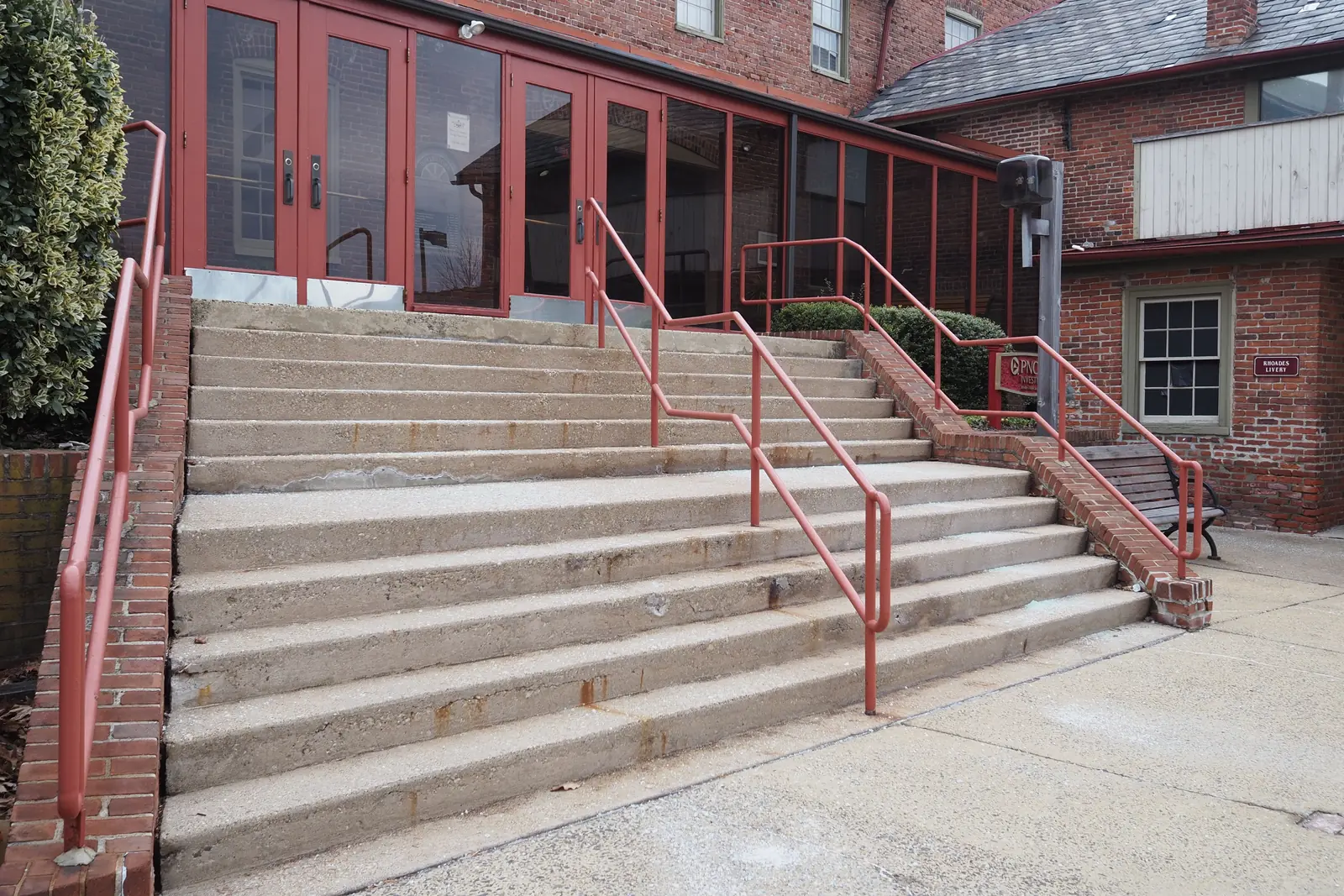
Total rise measured, risers set equal, step count on the quote
Concrete Steps in Frisco, TX
Concrete steps are designed from the total rise between two levels, not from the number of steps anyone asked for. Risers no more than 7¾ inches, treads at least 10, and every riser within ⅜ of an inch of the rest — that arithmetic happens before the forms go up.
- Equal risers to the code limit, or we tell you why the levels won't allow it
- Flight isolated from the house, not cast against the wall
- Repair and replacement priced side by side, both numbers yours
Tell us roughly how far it is from ground to door and how wide. Someone attends, measures the rise, and you get the number in writing.
On concrete steps, the odd one at the bottom was a decision, not an accident
A flight is built from the total rise between the ground and the door, divided into equal risers. Get that division right and every step is the same height. Get it wrong and the difference lands in one step, almost always the bottom one.
The residential code caps a riser at 7¾ inches and requires the tallest and shortest in a flight to be within ⅜ of an inch of each other, for the simple reason that a foot expects the next step to be where the last one was.
We measure the rise, do the division, and put the step count and the riser height on the quote. If the levels will not divide cleanly, you hear that at the estimate along with what it would take to fix them.
No fee, no obligation.
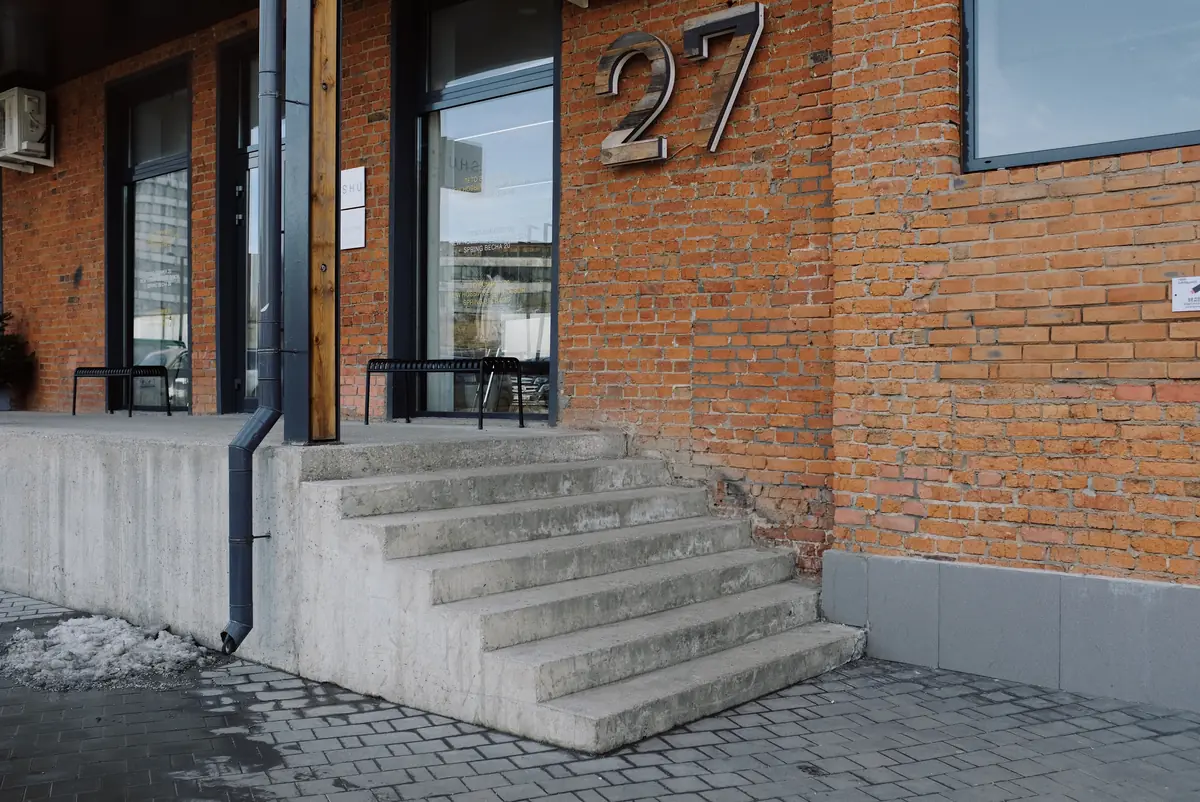
How we build concrete steps in Frisco
Four jobs cover the category. Each is quoted with the rise, the step count and the base stated.
Entry steps and stoops
An entry flight is a reinforced concrete structure rather than a stack of slabs, and it stands or falls on what is under the bottom step. We form the flight over compacted base that reaches past the disturbed backfill around the house, tie #3 or #4 rebar through the risers and the landing, and isolate the whole thing from the wall so the two can settle independently. Every flight is quoted with the total rise, the number of steps and the riser height written down.
Landings and porch slabs
The landing at the top of a flight is a small slab carrying concentrated load at its edge, which is where a cheap stoop fails first. We pour landings at 4 to 6 inches with #4 rebar, set fall of an eighth of an inch per foot away from the threshold, and thicken the edge where the top riser lands. Every landing is quoted with the finished level against the door threshold agreed before anything is formed.
Replacing a failed flight
Replacement is the answer for steps that have separated from the house, dropped at a corner or cracked through, because all three mean the ground under them moved. We break out the old flight, haul it away, rebuild and compact the base properly, and repour to equal risers rather than matching the flight that failed. Every replacement quote separates the demolition from the new work, so you can see what each half costs.
Repairing treads, noses and spalling
A chipped nose, a spalled tread or a surface that has flaked can be repaired where the flight itself is sound and still, and it is the cheaper answer by a wide margin. We cut back to solid concrete, bond a polymer-modified repair mortar to the profiled surface, and rebuild the nose to the original line. Every repair quote says plainly that it is cosmetic and structural only if the flight has stopped moving — on a flight that is still settling it buys a season.
The path the steps land on is a concrete walkway, and a flight that has dropped as a unit rather than broken up is concrete leveling. Spalling and cracks on flatwork generally are concrete repair, a tired surface on a sound structure is concrete resurfacing, and taking the old flight away is concrete removal. The rest of the trade is on the concrete services hub.
The spec goes on the quote before you decide anything.
Why concrete steps in Frisco separate and drop
Steps sit exactly where the ground was disturbed most — against the house, on backfill, at the point every visitor puts their weight. These four are what we find under a failed flight.
A flight sitting on builder backfill
The ground against a house was excavated for the foundation and then backfilled, and backfill consolidates for years after the builder leaves.
A flight founded on it goes down with it while the house stays where it is, which is why the gap opens at the wall rather than in the middle of the steps. Base that reaches past the disturbed ground is the fix, and it is decided before anything is formed.
Clay under a small, heavy structure
Frisco sits on Blackland Prairie clay, and the dominant Houston Black soil routinely tests at a plasticity index of 40 to 60, where the building code calls a soil expansive at 15.
A flight of steps is a heavy structure standing on a very small footprint, so it feels that movement as tilt rather than as flex. Compacted base under the full footprint and steel through the risers are what keep it acting as one piece.
Water discharging beside the bottom step
Downspouts and irrigation heads sited near an entrance put repeated water into the ground directly beside the flight.
Saturated clay on one side and dry clay on the other is what tips a stoop. Moving the discharge clear of the steps costs almost nothing next to rebuilding them.
Spalling on the tread noses
The nose of a tread is the thinnest, most exposed concrete in the flight, and it takes every footfall on its edge.
Where the surface was overworked or finished while bleed water was still standing, the top few millimetres are weak and the nose is where that shows first. A repair rebuilds the nose; it does not fix a slab that was finished badly across the whole tread.
The site visit tells you which of these you actually have.
You will know when the steps can be used before you book
All three dates go on your quote in writing. A new flight takes foot traffic at the 24 to 48 hour mark, and heavy items being carried up it should wait for the later dates rather than the first one.
Cold weather extends every one of them. If that applies to your pour, you hear it before the truck is ordered rather than afterwards.
Curing guidance: NRMCA CIP 11, Curing In-Place Concrete.
Our quote against the typical quote
Same flight, same doorway. The difference is whether the total rise and the riser height appear anywhere on the page.
| On the page | DFW Concrete Co. | The typical quote |
|---|---|---|
| Price | One number for the job as scoped | A per-foot range that moves on the day |
| Slab thickness | Stated in inches | Not mentioned |
| Reinforcement | Rebar or mesh, size and spacing | "Reinforced" — the entire line |
| Joint spacing | Planned and written | Cut wherever, if at all |
| Haul-off and clean-up | In the price | Added at the end |
Take our quote to any other contractor and compare it line by line. That is what it is for.
Free. No obligation. Most quotes back the same day.
How much do concrete steps cost in Frisco, TX?
Steps are priced per step rather than per square foot, because the forming work is the cost and it does not scale with area. These are 2026 market ranges, not your price — the fixed number goes on the written quote after the site visit.
| Work | What the number assumes | Typical range |
|---|---|---|
| New steps | ||
| Poured concrete step | formed and reinforced, equal risers, over compacted base | $200–$500 / step |
| Step at 4 feet wide (DFW read) | as above, priced on the width most entries use | $205–$620 / step |
| Landing or porch slab | 4–6in slab, #4 rebar, fall set away from the threshold | $7–$12 / sq ft |
| Working with the flight you have | ||
| Tread, nose and spalling repair | cut back to sound concrete, profiled, polymer-modified repair mortar | $4–$8 / sq ft |
| Demolition and haul-off | existing flight broken out, hauled and disposed of | $3–$6 / sq ft |
What moves a number inside its range: the width of the flight, the total rise, whether a landing is included, how much the base has to be dug out to reach undisturbed ground, and whether the old steps have to come out first. A flight rebuilt on the original footprint costs less than one that moves.
Free. No obligation. Most quotes back the same day.
How a steps job actually runs
Four steps, and the first one is a tape measure on the total rise.
The site visit
We measure the area, check the grade and the drainage, assess the soil, and confirm whether a truck can reach the pour.
The written quote
One fixed price, with the thickness, the reinforcement and the joint spacing stated — the same three items the City of Frisco asks for on the survey with a concrete and driveway permit application. Yours to keep and to compare.
Prep and pour
Old flight broken out where there is one, base dug past the disturbed backfill and compacted, forms built to the calculated risers, steel tied through the flight. Then the pour, the finish and the nose detail.
The cure
Forms pulled and the site cleared, then the slab is left undisturbed to gain strength on the schedule above.
Walk 24–48h · car 7 days · heavy 28 days
Step one costs nothing and commits you to nothing.
Concrete steps questions people ask before they book
Who are the best concrete steps contractors near me in Frisco, TX?
How much do concrete steps cost in Frisco?
How tall should each step be?
Can you repair concrete steps instead of replacing them?
Why have my steps pulled away from the house?
Do I need a permit for concrete steps in Frisco?
Tell us what the job is. We'll price it in writing.
Tell us the rough size and what you want done. Someone comes out, measures, and you get one fixed number in writing — not a range that moves on the day. Nothing is owed if you don't go ahead.
On-site estimate is free · no obligation · most quotes back the same day.
- Free on-site estimate across the North DFW ring
- Fixed price in writing before we start
- Reinforcement and thickness stated on the quote
- Clean-up and haul-off included