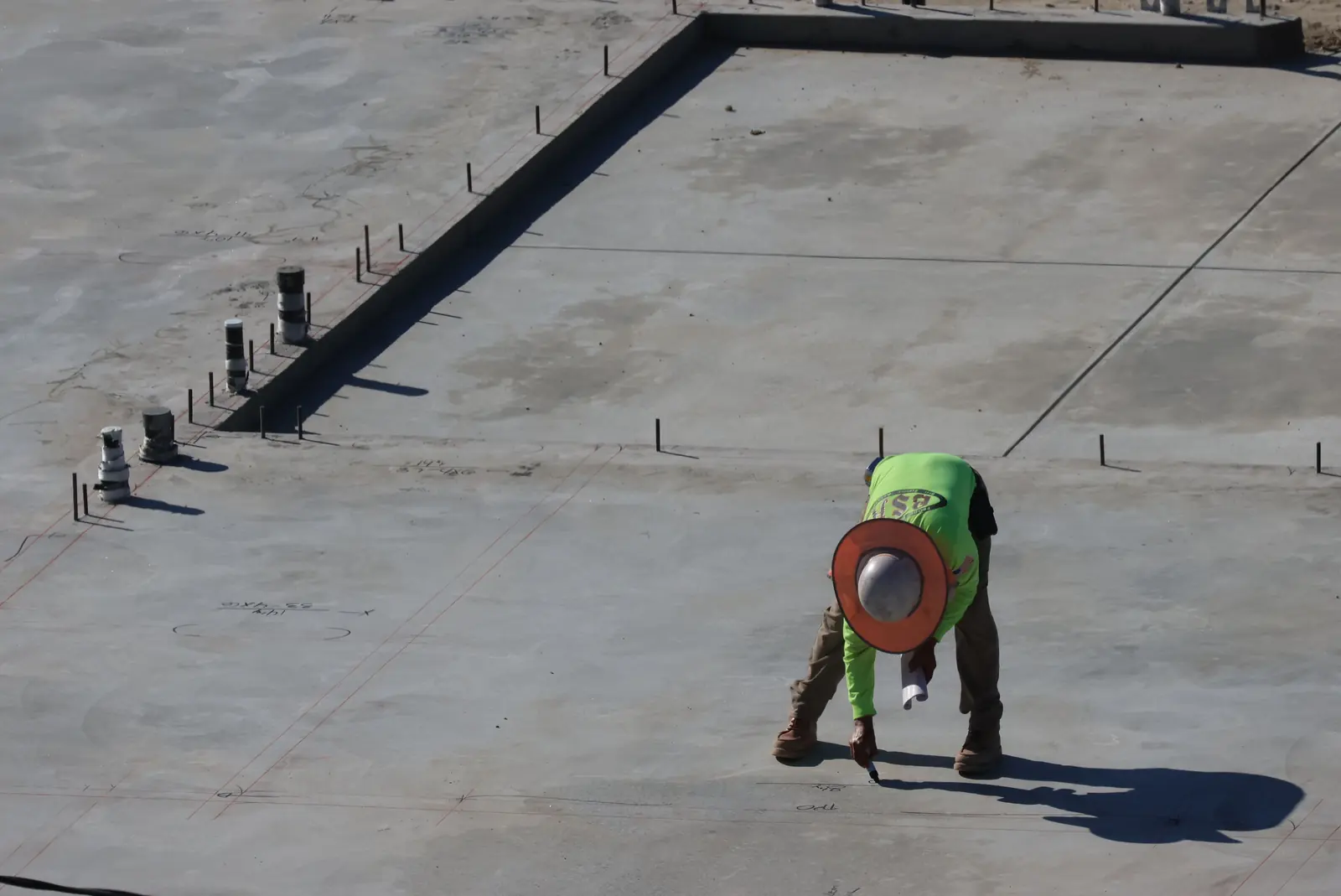
Thickness, reinforcement and edge detail — stated on every quote
Concrete Slabs in Frisco, TX
A concrete slab is sized by what stands on it, not by the square footage. Sheds, workshops, RVs, hot tubs, air-conditioning units and generators are five different slabs, and the estimate names which one you are buying before anything is ordered.
- 4 inches for light use, 5 to 6 for vehicles, tubs and machinery
- Steel chaired to mid-depth, never laid on the ground
- Slab isolated from the house and any footings it meets
Tell us the rough size and what is going on it. Someone attends, measures, and you get the number in writing.
The concrete slab gets poured before anyone asks what is going on it
A slab quoted by the square foot with no question about its use is a 4-inch slab with mesh, because that is the cheapest thing that can be called a pad.
It is the right slab for a garden shed and the wrong one for a filled hot tub, a lathe, a car lift or an RV. Those are concentrated loads, and they want 5 to 6 inches, #4 rebar at 18-inch centres and an edge thickened where the weight lands.
The question costs nothing to ask. Rebuilding a pad under a structure that is already on it costs the pad, the demolition and the structure coming off first.
No fee, no obligation.
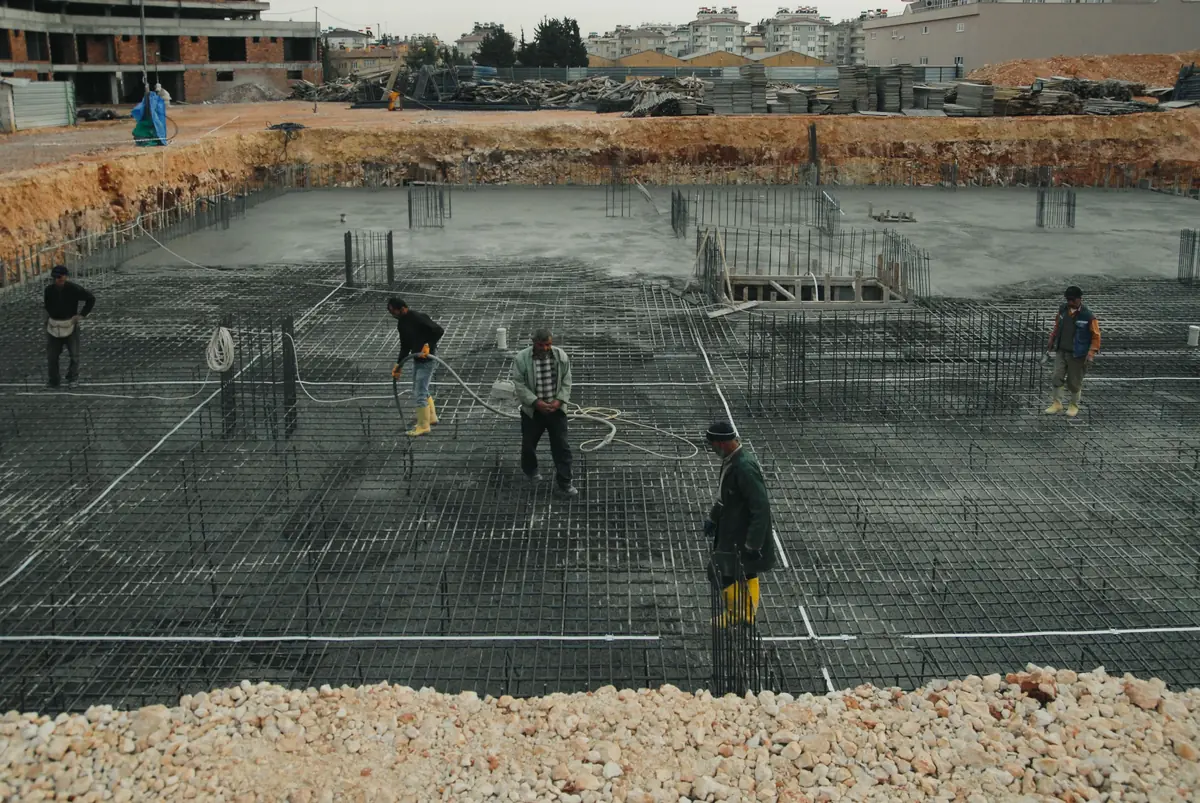
The slabs we pour, and what each one is built to carry
Four pads cover almost everything we are asked for. The estimate names which one your job is and what it will not carry.
Shed and garden-building pads
A shed pad is a light slab on grade sized to the building footprint plus an inch or two of overhang so rain runs off rather than back under the wall. We pour them at 4 inches using 3,000 to 3,500 PSI ready-mix over 4 inches of compacted base, with 6x6 welded wire mesh or #3 rebar chaired to mid-depth, and we set fall away from the door. Every shed pad quote states the finished level against the surrounding grade, because a pad poured flush with the lawn collects water against the timber.
RV, boat and heavy-vehicle pads
An RV pad is a heavy-duty slab, and the load that decides it is the jack or the tyre footprint rather than the total weight. We pour these at 5 to 6 inches with #4 rebar at 18-inch centres and a thickened edge where the wheels sit, over 4 to 6 inches of compacted crushed base. Every heavy-vehicle pad states the thickness and the edge detail on the quote, because a 4-inch pad under a stabiliser jack cracks from the point down.
Hot tub and spa pads
A hot tub pad carries a concentrated load that a normal patio slab was never sized for: the shell, the water and the people, on a footprint of a few square feet. We build them at 5 to 6 inches with #4 rebar, level rather than to fall, and set the pad clear of the house so the two can move independently. Every spa pad quote asks for the make and the filled weight first, because that is the number the thickness comes from.
Equipment, HVAC and generator pads
An equipment pad is a small slab with an outsized specification, because the load is concentrated and the machinery on it does not tolerate movement. We pour them at 4 to 6 inches depending on the unit, reinforce with #3 or #4 rebar, and cast in anchor points or conduit sleeves where the installer needs them rather than drilling afterwards. Every equipment pad quote states what is being cast in, agreed with you before the pour.
A slab that carries a building rather than sitting under equipment is a concrete foundation. Parking is a concrete driveway, outdoor living is a concrete patio, and a slab that has cracked or dropped is concrete repair. The same pads on a retail, office or trade site are on the commercial concrete page. The rest of the trade is on the concrete services hub.
The spec goes on the quote before you decide anything.
Small pads cost more per square foot, and here is why
A 60 square foot air-conditioning pad and a 600 square foot workshop floor take the same mobilisation: the same crew, the same forms, the same minimum load from the plant.
That is why a small pad quoted at the same rate per foot as a driveway is usually a quote that has not been thought about. We price the mobilisation as its own line, and if you have two or three small pads to pour, doing them on one visit is the single biggest saving available on a job this size.
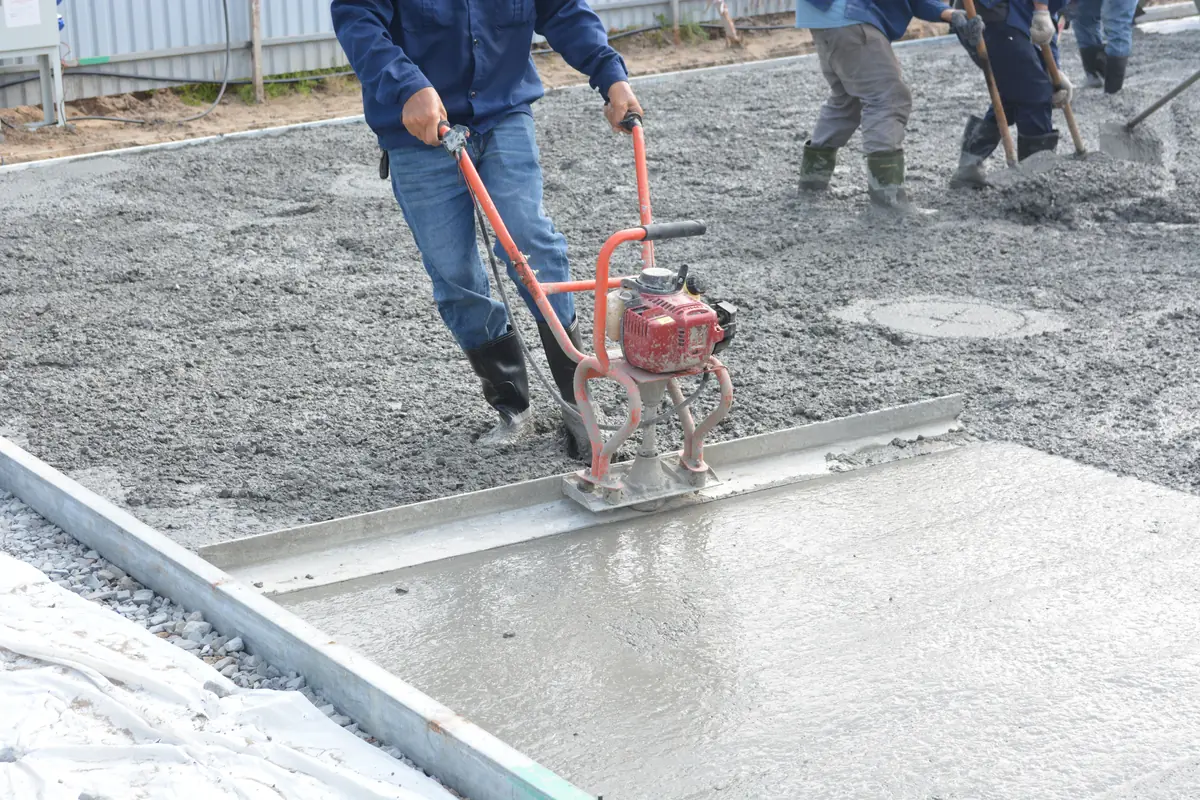
Why pads fail in Frisco and North Texas
A pad is small, which means it spans very little ground and reacts to whatever that ground does. These four account for nearly every failed slab we are called out to look at.
A small slab on moving clay
Frisco sits on Blackland Prairie clay, and the dominant soil — Houston Black — routinely tests at a plasticity index of 40 to 60, where the building code calls a soil expansive at 15.
A driveway spans that movement across its length. A 6-by-8 pad does not: it sits on one patch of ground and tilts with it. Compacted base under the whole footprint and steel at mid-depth are what stop a small slab behaving like a raft.
Point loads on a slab poured for spread weight
A filled hot tub, an RV stabiliser jack, a car lift post or a generator puts its whole weight through a few square inches.
A 4-inch slab with mesh handles spread weight and cracks under a point load, usually from the corner where the load sits. Where the load is concentrated, the slab goes to 5 or 6 inches with #4 rebar and a thickened section under the load.
Pads cast hard against the house
A pad poured tight to the foundation ties two slabs together that move on different schedules, and the crack opens along the join.
An isolation joint at the house and at any footing the pad meets costs almost nothing while the forms are open. After the pour, the only remedy is a saw.
Water sitting where the pad meets the lawn
North Texas lawns are watered hard through the summer, and a pad poured flush with the surrounding grade becomes the low point that the irrigation drains into.
The soil beside and under one edge stays saturated while the rest dries, and the two halves move on different schedules. Setting the pad slightly proud of grade with fall away from it costs nothing at the forming stage.
The site visit tells you which of these you actually have.
You will know when you can put the shed on it before you book
All three dates go on your quote in writing. A pad takes foot traffic long before it takes a structure, and a concentrated load like a hot tub or an RV should wait for full strength rather than the 7-day date.
Cold weather extends every one of them. If that applies to your pour, you hear it before the truck is ordered rather than afterwards.
Curing guidance: NRMCA CIP 11, Curing In-Place Concrete.
Our quote against the typical quote
Same pad, same corner of the yard. The difference is whether anyone wrote down what it was built to carry.
| On the page | DFW Concrete Co. | The typical quote |
|---|---|---|
| Price | One number for the job as scoped | A per-foot range that moves on the day |
| Slab thickness | Stated in inches | Not mentioned |
| Reinforcement | Rebar or mesh, size and spacing | "Reinforced" — the entire line |
| Joint spacing | Planned and written | Cut wherever, if at all |
| Haul-off and clean-up | In the price | Added at the end |
Take our quote to any other contractor and compare it line by line. That is what it is for.
Free. No obligation. Most quotes back the same day.
How much does a concrete slab cost in Frisco, TX?
These are the ranges the Frisco and North DFW market runs at in 2026, with the specification each number assumes. Small pads sit at the top of their range because the mobilisation is the same as for a large pour.
| Work | What the number assumes | Typical range |
|---|---|---|
| A new pad | ||
| Shed or light storage pad | 4in slab, 3,000–3,500 PSI, mesh or #3 rebar, 4in base | $7–$12 / sq ft |
| RV, boat or workshop pad | 5–6in slab, #4 rebar at 18in centres, thickened edge | $10–$16 / sq ft |
| Hot tub or spa pad | 5–6in slab, #4 rebar, sized for the filled weight | $10–$16 / sq ft |
| HVAC, generator or equipment pad | 4–6in slab, #3 or #4 rebar, anchors and sleeves cast in | $10–$16 / sq ft |
| Working with what is already there | ||
| Demolition and haul-off | existing 4in slab broken out, hauled and disposed of | $3–$6 / sq ft |
| Replacing a failed section | saw-cut to the nearest joints, base rebuilt, dowelled and repoured | $8–$15 / sq ft |
| Sealing once it has cured | cleaned, then a penetrating sealer applied at the stated coverage | $1–$3 / sq ft |
What moves a number inside its range: the thickness, whether the plant can reach the pour or it has to be barrowed, how much excavation the levels need, and anything being cast into the slab. Two small pads poured on one visit cost less than the same two pads poured a month apart.
Free. No obligation. Most quotes back the same day.
How a slab pour actually runs
Four steps, and the first one is where we find out what the pad has to carry.
The site visit
We measure the area, check the grade and the drainage, assess the soil, and confirm whether a truck can reach the pour.
The written quote
One fixed price, with the thickness, the reinforcement and the joint spacing stated — the same three items the City of Frisco asks for on the survey with a concrete and driveway permit application. Yours to keep and to compare.
Prep and pour
Footprint excavated and the base compacted, forms set to the level or the fall, steel tied and chaired to mid-depth, anchors and sleeves positioned. Then the pour, the finish, and the joints where the size needs them.
The cure
Forms pulled and the site cleared, then the slab is left undisturbed to gain strength on the schedule above.
Walk 24–48h · car 7 days · heavy 28 days
Step one costs nothing and commits you to nothing.
Concrete slab questions people ask before they book
Who are the best concrete slab contractors near me in Frisco, TX?
How much does a concrete slab cost in Frisco?
How thick should a concrete slab be?
Does a concrete slab need rebar or is mesh enough?
How long does a concrete slab take to cure?
Do I need a permit for a concrete slab in Frisco?
Tell us what the job is. We'll price it in writing.
Tell us the rough size and what you want done. Someone comes out, measures, and you get one fixed number in writing — not a range that moves on the day. Nothing is owed if you don't go ahead.
On-site estimate is free · no obligation · most quotes back the same day.
- Free on-site estimate across the North DFW ring
- Fixed price in writing before we start
- Reinforcement and thickness stated on the quote
- Clean-up and haul-off included